
About Rigel Institute of Maritime Studies
Rigel Institute of Maritime Studies, established in March 2020, enhances the skills of seafarers through specialized marine training. It aims to meet international standards and regulations for competent seafarers, offering state-of-the-art facilities and fostering a spirit of mutual learning in the rapidly evolving shipping industry. The institute contributes to the efficient transport sector, crucial for a country like India with significant maritime access.



Courses
The Services we offer
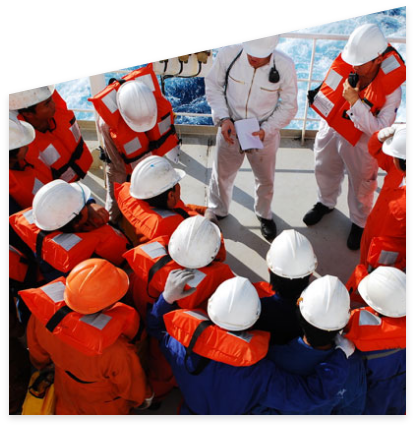
MARITIME ENGLISH
The theory course is in accordance with the ISM code and STCW Code 1978 as amended in Manila amendment requirements and covers the following topic:
The theory course is in accordance with the ISM code and STCW Code 1978 as amended in Manila amendment requirements and covers the following topic:
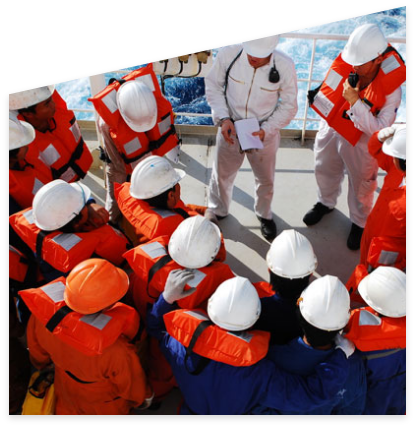
RATING FORMING PART OF AN ENGINEERING WATCH
The course fulfils the minimum requirements of Regulation III/4, Section A-III/4 And Table A-III/4 of the International Convention on Standards of Training, Certification and Watchkeeping for Seafarers, STCW/78, as amended in 2010
The course fulfils the minimum requirements of Regulation III/4, Section A-III/4 And Table A-III/4 of the International Convention on Standards of Training, Certification and Watchkeeping for Seafarers, STCW/78, as amended in 2010
.jpg)
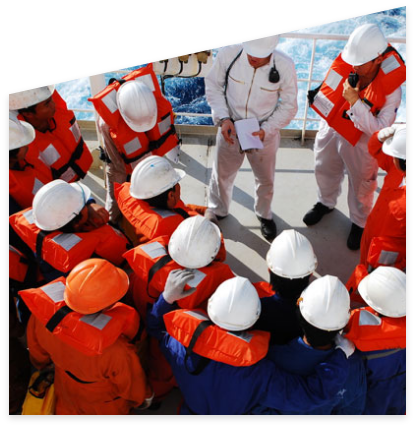
CERTIFICATE OF PROFICIENCY IN PERSONAL SAFETY & SOCIAL RESPONSIBILITIES
requirements laid down in Regulation VI/1paragraph 1, Paragraph 2.1.4. of Section A-VI/1 and Table A-VI/1-4 of STCW convention, as amended in 2010. The Candidate has also met the additional criteria specified in the STCW Convention, applicable to the issue of the certificate.
requirements laid down in Regulation VI/1paragraph 1, Paragraph 2.1.4. of Section A-VI/1 and Table A-VI/1-4 of STCW convention, as amended in 2010. The Candidate has also met the additional criteria specified in the STCW Convention, applicable to the issue of the certificate.
Alumini
Students Testimonial


Manoj Kumar
I have found Rigel Institute course on google when i am searching my course Bridge and Engine room resource management course at that time Rigel Institute course website helps me to find the course and institute for the same.
Maniraj Shenava
I am searching course crowd and crisis management and my search ended on Rigel Institute course and the support which i got from them is tremendous.
Mohammad Raza
Rigel Institute help me to do my course online from Dubai they have very good support and team and courses available to do any time and any where. Thanks team Rigel Institute course.
Amit Patil
Rigel Institute course provides variety of courses and you can book your seat within few minutes with proper details they have good team and reputed institute tie up which will fulfil the requirements of seafarers. thanks for the support of team Rigel Institute course.
Rabeindra Yathushan
I have found Rigel Institute course on google when i am searching my course Bridge and Engine room resource management course at that time Rigel Institute course website helps me to find the course and institute for the same.
-
25+
Total Staff
-
10+
Total Courses
-
5+
Total Classrooms
-
2+
Total Offices
Join us
Error
Error
Error